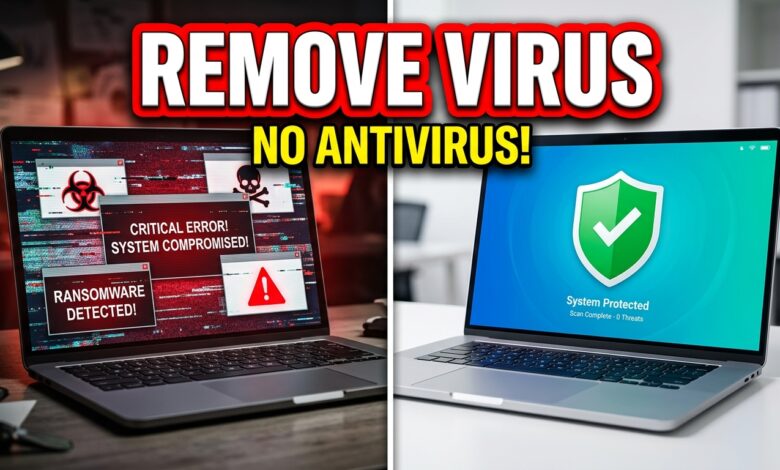
Imagine you are sitting at your desk, working on a major project for your job or studying for a final exam. Suddenly, your screen begins to stutter, and your mouse starts moving on its own. Strange pop-up boxes display flashing ads on your desktop, and your cooling fan starts spinning loudly like a jet engine. Your laptop has obviously caught a digital bug, and a wave of pure panic instantly washes over you.
Most people immediately assume they need to drop a ton of money on a premium security subscription or pay a repair shop to fix it. This stressful situation happened to my colleague Sarah last month when a malicious download locked up her files right before a presentation. She was terrified of losing her family photos and thought her laptop was permanently broken. Thankfully, you do not need to pull out your credit card to save your computer from an attack.
Your operating system already contains powerful hidden utilities designed to track down and destroy digital threats manually. By taking control of your system configurations, you can completely clean your device manually for free. Let let us walk through the exact steps together to learn how to remove virus from laptop without antivirus software and restore your peace of mind today.
Hunt Down and Kill Malicious Background Processes
Whenever a digital bug enters your machine, it has to run a background program to do its dirty work. This background program eats up your processor cycles, causing your computer to feel incredibly laggy and warm to the touch. A great example of this happened to my friend Mike, who noticed his computer became blazing hot even when he wasn’t using it. We discovered a rogue background process was silently hijacking his system resources to mine cryptocurrency for a hacker.
To catch these bad programs in the act, you need to open your built-in system monitoring window. Press the keys Ctrl + Shift + Esc simultaneously on your physical keyboard to launch your Task Manager panel instantly. Click on the “Processes” column header to sort all active applications by their resource usage. This arranges the heaviest programs right at the top of your view so you can see exactly what is draining your laptop.
Carefully scan through the list for any names that look suspicious, overly long, or full of random letters. If you find a process that uses massive power but has an unknown developer name, right-click it and select “Open file location” to see where it lives. After noting down its location folder, return to the Task Manager, right-click the item again, and click “End task” to freeze its operations. Stopping this file from executing is the critical first phase when learning how to remove virus from laptop without antivirus software.
Delete Suspicious Apps and Clean Your Startup Directory
Many simple bugs survive system reboots by embedding themselves directly into your computer’s automatic startup list. This allows them to launch automatically the second your desktop loads without your permission. My neighbor Uncle Bob ran into this issue after downloading what he thought was a free cooking recipe booklet. The download secretly bundled a malicious toolbar application that hijacked his internet home page every single time he turned his computer on.
To stop this annoying cycle, you must remove the program from your system startup list and delete it from your hard drive entirely. Inside your Task Manager window, click over to the “Startup apps” tab on the left menu panel. Look through the list of programs authorized to load during bootup and look for anything you do not recognize. Right-click on any suspicious item and select “Disable” to keep it asleep the next time your system power cycles.
Next, you must remove the primary installation files from your machine permanently. Open your Start menu, type “Control Panel” into the search bar, and select “Uninstall a program” under the Programs header. Click on the “Installed On” column header to sort the entire application list by the exact date they entered your system. If you see a weird app that was installed on the exact same day your laptop started acting strangely, click it and select “Uninstall” to clear it out.
Purge Temporary Folders to Wipe Out Corrupted Scripts
Malware creators love hiding their malicious script files inside your user profile’s temporary directories. These folders are meant to hold harmless cache data, so everyday computer users rarely check them. I once helped a student named Lily whose web browser kept throwing scary security warnings on her screen. When we dug into her computer’s hidden local app data folders, we found a malicious script executing itself from a deep temp directory.
Cleaning out these folders is a completely safe and incredibly effective way to destroy hidden viruses. To open your hidden temporary workspace, press the Windows Key + R on your keyboard to open the run command box. Type the phrase %temp% exactly as shown into the open field and press your Enter key. This command will instantly launch a folder containing thousands of temporary files that your applications have left behind over the months.
Press Ctrl + A to highlight every single folder and file inside this temporary directory at the same time. Hold down your Shift + Delete keys together to permanently erase these items from your drive without sending them to your Recycle Bin. If a window pops up saying a specific file cannot be deleted because it is currently in use, simply click “Skip” and erase everything else. Clearing this digital trash bin removes the hiding spots where tricky malware files like to camp out.
Clear Malicious Browser Extensions and Reset Network Configurations
Modern web threats often take the form of browser hijackers or malicious proxy settings rather than deep system code. These extensions look like helpful tools, but they secretly read your web traffic and redirect your searches to sketchy ad networks. My aunt experienced this last week when her default search engine suddenly switched to a random webpage full of flashy pop-up windows. She had accidentally allowed a malicious browser extension to install while trying to stream a television show online.
To reclaim your web browser, click the three tiny dots in the top-right corner of Google Chrome or Microsoft Edge and open the “Extensions” menu. Carefully review every add-on you have active and immediately click “Remove” on anything you did not install yourself. This breaks the link the threat has over your internet searches. This step is a brilliant technique when investigating how to remove virus from laptop without antivirus software for browser-based infections.
Next, you must ensure the malware hasn’t tampered with your laptop’s main internet pathway settings. Open your primary Settings panel, click on the Network & Internet category, and select the Proxy tab. Ensure that the toggle switch next to “Use a proxy server” is turned completely off unless you manually configured one for work. If a hacker has placed their own proxy address in this field, they can intercept your personal login data, so clearing it out restores your online security instantly.
Deploy the Built-in Command Prompt and the Hidden Microsoft Scan Utility
If you want to ensure that your laptop is completely clean, you can use advanced system commands to repair core system files. Windows actually includes a fantastic, hidden malware removal scanner that runs silently without any third-party app downloads. My tech client David thought he had to format his entire system drive to clear a persistent file worm. I showed him how to trigger a hidden administrative command terminal, and it cleaned his system paths in less than twenty minutes.
To access these advanced options, type “cmd” into your main desktop search bar, right-click the Command Prompt icon, and choose “Run as administrator.” This opens a secure black window where you can type system level instructions directly into your laptop’s core shell. Type the command sfc /scannow into the black interface and hit your Enter key to let your machine inspect its own core files for corruption.
After the system file check finishes repairing any broken files, you can launch Microsoft’s secret malware extraction tool. Press your Windows Key + R keys again, type the word mrt into the open run field, and hit Enter. This launches the official Microsoft Malicious Software Removal Tool, which is updated automatically by your system behind the scenes. Choose the “Full Scan” option within the utility interface to let it thoroughly scrub your system memory for major known threats for free.
Pro Tips for Manual Malware Removal
-
Boot Your Device Into Safe Mode First: If a virus refuses to let you open your Task Manager or delete files, restart your laptop into Safe Mode. Safe Mode only loads essential system files, which stops the malware script from launching and locking you out.
-
Check Your Windows Hosts File for Hijacks: Hackers love modifying your laptop’s internal hosts file to redirect safe websites to scam pages. Navigate to your system drivers folder and open the hosts file with Notepad to ensure no strange web addresses are listed at the bottom.
-
Show Hidden File Extensions in File Explorer: Many viruses try to trick you by naming a file something deceptive like “document.pdf.exe” to hide their true nature. Turn on the “File name extensions” checkbox in your File Explorer view options to see the real extension of every file.
-
Disconnect from the Internet While Cleaning: Some advanced malware commands continuously download backup files from online servers if you delete them. Turn off your Wi-Fi connection while performing these manual cleanup steps to cut off the virus from its home base.
-
Clear Your Full DNS Resolver Cache: If your laptop still struggles to connect to safe security websites after cleaning, your internet routing cache might be poisoned. Open your command terminal, type
ipconfig /flushdns, and press Enter to clear out your network paths completely.
Frequently Asked Questions
Understanding the inner workings of system files helps keep your personal data secure. Here are answers to common questions about manual virus cleaning.
Can a virus hide inside my laptop’s Recycle Bin?
Yes, malicious files can absolutely sit inside your Recycle Bin if you just dragged them off your desktop without fully erasing them. My cousin thought she deleted a bad file, but the script remained active inside her bin until we right-clicked the icon and selected “Empty Recycle Bin.” Always use the permanent delete shortcut to bypass the bin entirely.
Is the built-in Microsoft MRT utility just as good as a third-party antivirus?
The Malicious Software Removal Tool (MRT) is highly effective at finding and removing specific widespread threats that are actively causing harm. While it doesn’t offer real-time web shield protection like a premium security package, it is a fantastic tool when learning how to remove virus from laptop without antivirus software during an emergency.
Why does my laptop still feel slow after I deleted the malicious application files?
If your computer remains sluggish, the virus may have left behind broken registry keys or corrupted system files that are stalling your processor. Running the administrative DISM or SFC commands inside your command terminal will clean up these leftover software remnants and restore your original operational speed.
Will executing these manual cleaning steps delete my personal documents or family photos?
No, these manual troubleshooting steps target temporary system files, unauthorized startup apps, and corrupted browser extensions. Your personal documents, family photos, and saved videos will remain completely untouched. Just make sure you do not accidentally delete your own personal data folders while cleaning out your temporary directories.
How do I know if my laptop is completely clean after following this guide?
Your laptop is clean when your CPU usage drops back down to normal low percentages while idling, your fan stops roaring, and browser pop-ups stop appearing. If your apps open quickly and your internet searches lead to the correct websites without weird redirects, your manual cleanup has successfully cleared the threat.
Conclusion
Waking up to find a digital intruder on your computer is a stressful roadblock, but you do not need to spend money on fancy software to fix it. By taking a systematic approach to cleaning your background processes, managing your startup directories, and using built-in system tools like MRT, you can rescue your device entirely on your own. Knowing how to handle these technical issues manually transforms you from a worried user into a self-reliant computer expert.
Staying safe online in the future is all about maintaining great digital habits and paying close attention to what you download. Always avoid downloading files from suspicious email attachments, skip unverified third-party software bundles, and check your storage directories once a month to keep your system clean. Take charge of your computer’s health right now—open up your Task Manager and inspect your active processes list to make sure your machine is running perfectly clean today!