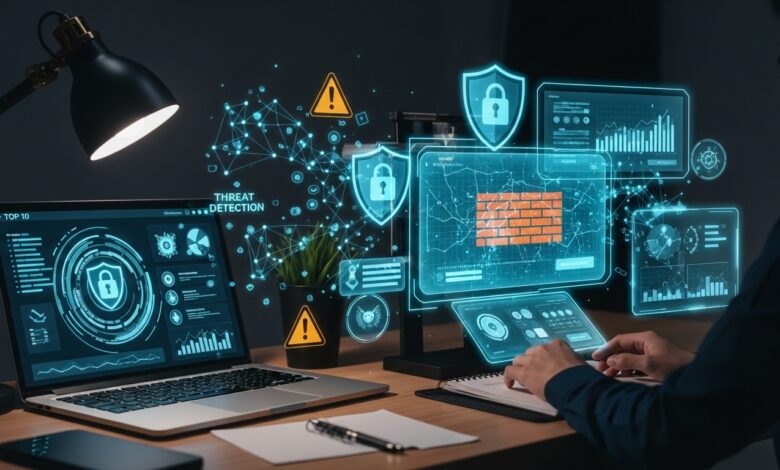
In an era where technology advances at breakneck speed, the need for robust cybersecurity measures has never been more critical. As companies increasingly rely on digital infrastructures, cyber threats have evolved, making traditional security strategies inadequate. This article delves into the top 10 cybersecurity tools of 2026, designed to combat an array of threats, safeguard sensitive data, and fortify organizational defenses.
1. DarkTrace
DarkTrace continues to standout as an innovator in AI-driven cybersecurity solutions. Utilizing machine learning and artificial intelligence, this autonomous response tool enables organizations to detect deviations from normal behavior in real-time. Updates in 2026 have bolstered its capabilities to autonomously respond to threats, making it essential for managing complex cyber environments. DarkTrace’s AI “immune system” ensures that organizations can operate with agility, enhancing their defense while reducing reliance on human intervention.
2. Palo Alto Networks Cortex XSIAM
Palo Alto Networks’ Cortex XSIAM integrates advanced analytics and automation to deliver a comprehensive security platform. As an extended security information and event management (SIEM) tool, it amalgamates and analyzes security data from various sources to provide actionable insights. In 2026, its ability to correlate threats across hybrid environments—spanning on-premises and cloud setups—has saved organizations countless hours by accelerating incident response times and improving threat detection accuracy.
3. CrowdStrike Falcon
With a reputation for excellence, CrowdStrike’s Falcon platform offers a cloud-native endpoint protection solution powered by AI. The Falcon platform monitors endpoints for malicious activities, utilizing advanced behavioral analysis to thwart attacks before they can escalate. By embracing a proactive stance, the latest version of Falcon in 2026 conducts deeper investigations into threat vectors, ensuring a layered approach to endpoint security that is both effective and efficient.
4. Zscaler Zero Trust Exchange
As remote work and hybrid cloud environments proliferate, Zscaler’s Zero Trust Exchange has emerged as a go-to solution for secure internet access. With its zero trust framework, Zscaler verifies every user and device, effectively mitigating risks far more than traditional VPNs. By segmenting access permissions, the tool has helped organizations better manage user data and align with contemporary compliance standards. Businesses in 2026 leverage Zscaler not just for security, but as an enabler of secure digital transformation.
5. Splunk Security Cloud
Splunk’s capacity for handling vast amounts of security data makes it a leading choice in cybersecurity. The Security Cloud offers enhanced threat detection and incident response through its robust analytics capabilities. Innovations in 2026 have introduced embedded AI features that automate routine analysis, enabling security teams to focus on high-priority tasks. Its seamless integration with other tools makes it a dynamic choice in a multi-vendor ecosystem, helping businesses consolidate their security efforts effectively.
6. CyberArk Identity
As identity-based cyber threats continue to escalate, CyberArk’s Identity solution has refined its offerings in 2026. Specializing in privileged access management (PAM), CyberArk ensures that sensitive data is protected from unauthorized access. Its comprehensive suite encompasses identity governance, threat detection, and adaptive access controls, making it critical for organizations striving to minimize insider threats and comply with regulatory standards. The user-friendly interface enhances user adoption across departments, further strengthening its security posture.
7. SentinelOne Singularity
SentinelOne’s Singularity platform augments endpoint protection through an AI-driven defense mechanism. The evolution of Singularity in 2026 centers on its integrated threat hunting capabilities, allowing security teams to proactively seek threats across networks. Enhanced automation features streamline incident response, reducing the time between detection and remediation. The platform stands out for its ability to self-remediate and roll back unwanted changes, minimizing disruptions from potential breaches effectively.
8. Forcepoint Data Loss Prevention (DLP)
Data breaches pose a substantial financial risk to organizations. Forcepoint’s DLP solution has been enhanced significantly in 2026, introducing advanced analytics to prevent data exfiltration. By focusing on human behavior, the software can detect and mitigate anomalous activities that may indicate a data leak risk. With its intuitive policy management and real-time response capabilities, Forcepoint empowers organizations to safeguard sensitive information without hindering user productivity.
9. Check Point Quantum Security
Check Point’s Quantum Security architecture provides an advanced threat prevention strategy equipped to counter sophisticated cyber threats. In 2026, the platform has integrated next-generation firewalls, intrusion prevention systems, and advanced threat intelligence for real-time updates. Its ability to underpin both cloud and on-premises environments ensures a holistic protective strategy. Enhanced ease of management and visibility across all devices makes Quantum Security indispensable in the modern cybersecurity toolkit.
10. Tanium
Tanium remains a leader in endpoint management, delivering unparalleled visibility and control across large networks. As organizations continue to grapple with dispersed IT environments, Tanium’s low-latency architecture allows for real-time data collection and incident response. In 2026, the platform’s new features offer enriched analytics and streamlined workflows tailored for large enterprises, empowering security teams with actionable intelligence to address vulnerabilities before they can be exploited.
Conclusion
As the cybersecurity landscape continues to evolve in 2026, organizations must remain vigilant and proactive in their defense strategies. The tools listed above represent the forefront of cybersecurity technology, addressing increasingly complex threats while simplifying security management. Implementing these tools not only enhances an organization’s ability to defend against cyberattacks but also fosters a culture of security awareness that can lead to lasting resilience in an unpredictable digital age. Embracing these advanced cybersecurity solutions ensures that businesses can thrive securely, paving the way for innovation without compromising their safety in the digital realm.